
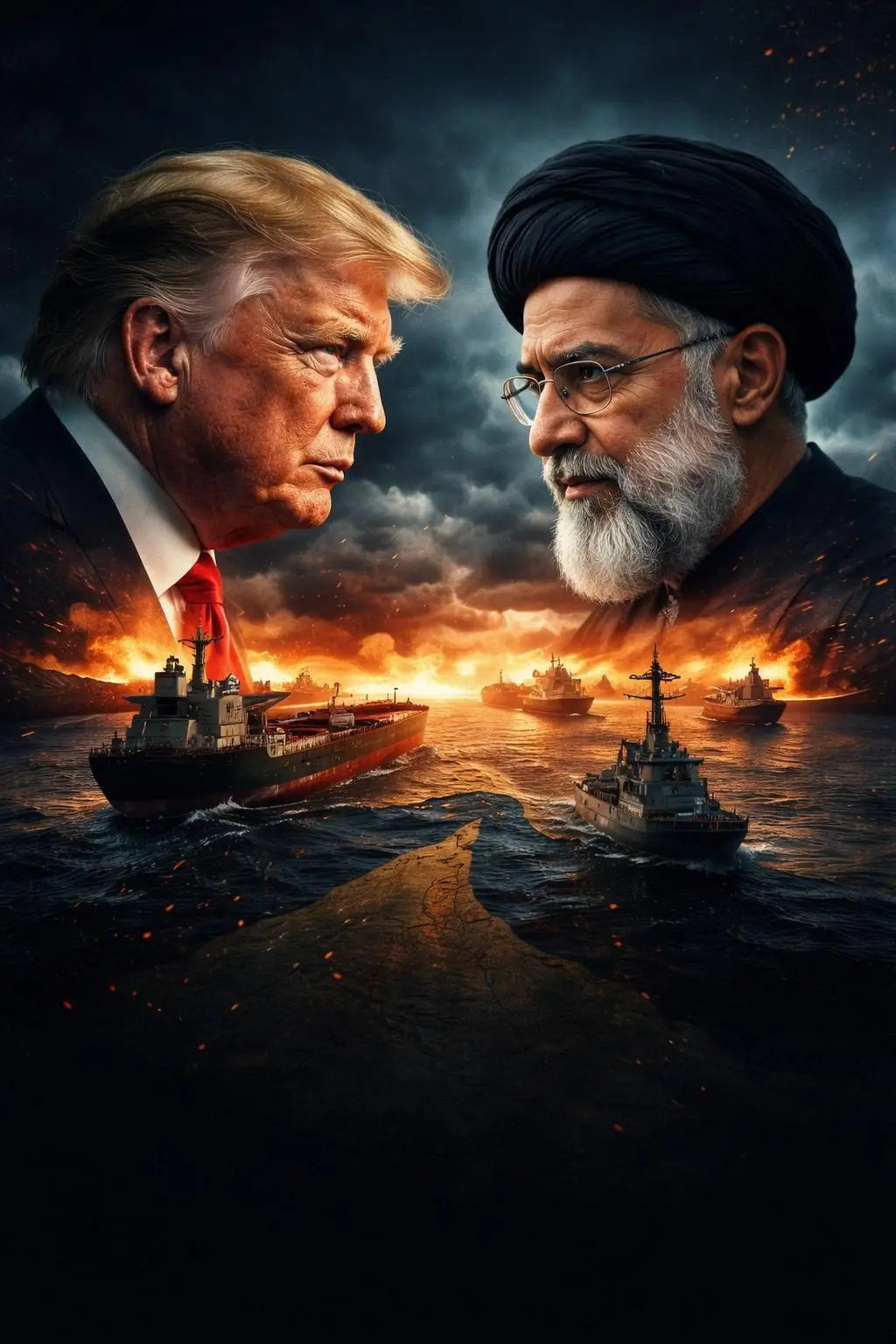
Iran has issued a strong warning to commercial vessels and oil tankers operating in the strategically vital Strait of Hormuz, signaling a new phase in rising geopolitical tensions across the Gulf. The Strait of Hormuz remains one of the most critical global oil supply routes, and any disruption in this region can directly impact international energy markets and maritime trade.
Iran Strait of Hormuz Shipping Warning Explained
According to Iranian military officials, all ships transiting through the Strait of Hormuz must coordinate their movements with Iranian forces. Tehran claims it fully controls the security of the waterway and insists that navigation should only occur through its approved channels. This Iran Strait of Hormuz shipping warning has raised concerns over maritime trade disruption and the safety of oil tanker routes in the Middle East.
US Launches “Project Freedom” Initiative
In response, the United States has announced a new initiative called “Project Freedom” to secure maritime traffic and assist stranded ships. The move reflects ongoing US Navy operations in the Gulf and aims to ensure international shipping safety in the Strait of Hormuz. However, it has also added to the already complex Iran-US conflict, further fueling geopolitical tensions in the Middle East.
Impact on Global Oil Supply and Trade
The Strait of Hormuz plays a crucial role in global oil supply routes, with a large percentage of the world’s oil shipments passing through it. Any escalation in the region could disrupt oil tanker routes, increase oil prices, and affect global economic stability. Experts warn that continued military escalation in the Gulf region could have serious consequences for maritime security and international trade.
Conclusion
As tensions continue to rise, the Strait of Hormuz remains at the center of global attention. With Iran asserting control and the US reinforcing its presence, the risk of confrontation is increasing. The international community is closely monitoring the situation, as any disruption in this key waterway could have far-reaching impacts on global markets, energy security, and geopolitical stability.