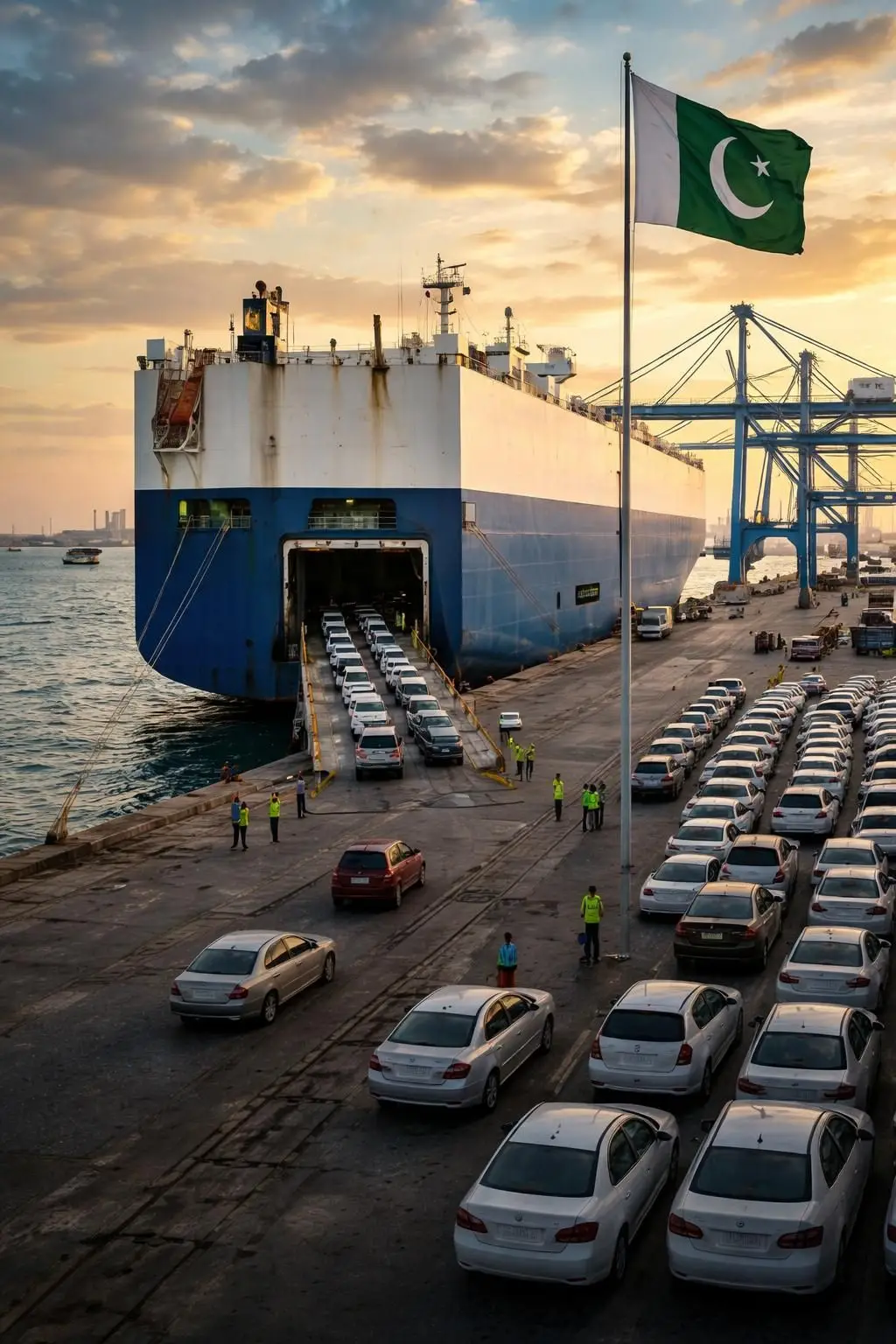
Pakistan is reportedly considering a new automotive framework under its 2026–31 policy that would allow the import, refurbishment, and re-export of used vehicles, marking a significant shift in the country’s auto industry strategy.
The proposed policy is aimed at transforming Pakistan into a regional hub for vehicle refurbishment and export, rather than focusing solely on domestic resale.
Model Inspired by International Free Zones
According to reports, the proposed system is inspired by the business model used in the Jebel Ali Free Zone, where vehicles and goods are imported, processed, and re-exported without entering local consumer markets
Officials believe this approach could help Pakistan attract foreign investment, strengthen industrial activity, and improve employment opportunities in the automotive and logistics sectors.
Strict Licensing and Export-Only Rules
Under the proposed framework, only licensed companies would be allowed to import used vehicles into the country. These companies would be responsible for refurbishing the vehicles and exporting them to international markets.
Authorities have made it clear that these vehicles would not be allowed for sale within Pakistan, ensuring that the policy remains strictly export-oriented.
In addition, imported vehicles would be required to be re-exported within a maximum period of nine months, according to early draft proposals.
Investment and Job Creation Goals
The initiative is reportedly being supported by the Special Investment Facilitation Council, which is working to attract foreign direct investment and promote industrial growth in key sectors.
Officials expect that the policy could create new job opportunities in vehicle inspection, refurbishment, logistics, shipping, and related services.
IMF Consultation Before Final Approval
Sources suggest that the proposal is currently under discussion with the International Monetary Fund (IMF) as part of broader economic reform consultations.
Once reviewed, the policy will be presented for final approval by the federal cabinet.
Expected Impact on Pakistan’s Automotive Industry
If implemented, the policy could reshape Pakistan’s automotive sector by shifting focus toward export-based industrial activity. Industry experts believe it may help:
- Increase foreign exchange earnings
- Develop technical skills in refurbishment and engineering
- Strengthen logistics and port operations
- Position Pakistan as a regional re-export hub
Conclusion
Pakistan’s proposed used vehicle import, refurbishment, and export policy represents a major structural shift in the auto industry. While still under review, the plan signals a move toward export-led industrial growth and greater integration into global automotive supply chains.